


Funding Phase II (2026–2030)
Alternative Rationalities and Esoteric Practices in a Global Perspective
This is a brief overview of CAS-E’s Reorientation. Please find the extended version here.
The DFG Center for Advanced Studies – Erlangen (CAS-E) investigates practices that are marked as esoteric and negotiated in relation to hegemonic claims of rationality. In the first funding phase (2022–2026), an interdisciplinary research space was established at the intersection of Religious Studies, Anthropology, and Area Studies (including Sinology), alongside contributions from other disciplines. In relation to the notion of esoteric (as an adjective and known), CAS-E analyzed practices aimed at predicting, controlling, or transforming contingent life events – such as divination, spiritual healing, and interactions with immaterial agents – across diverse settings. This work had initially built on a Käte-Hamburger-Kolleg „Fate, Freedom and Prognostication: Strategies for Coping with the Future in East Asia and Europe“ that existed from 2009 until 2021 as its predecessor. The second funding phase, starting in April 2026, introduces a generational shift and a conceptual reorientation. The new leadership team consists of Giovanni Maltese (Religious Studies), Dominik Müller (Cultural and Social Anthropology, CAS-E Spokesperson), and Eva Pils (Human Rights Law).
The focus now lies on the situated and globally entangled practices of marking and boundary-making through which practices are identified or (de-)legitimized as esoteric. These include attributions, translations, and (re-)contextualizations that frame practices as legitimate, dangerous, irrational, or alternative. A central emphasis lies on epistemic orders, power asymmetries, and the positionality of researchers. Legal and human rights perspectives are newly integrated to address fields of normative tension surrounding practices marked as esoteric. An “analytical double helix” connects heuristic comparison with performativity-theoretical approaches.
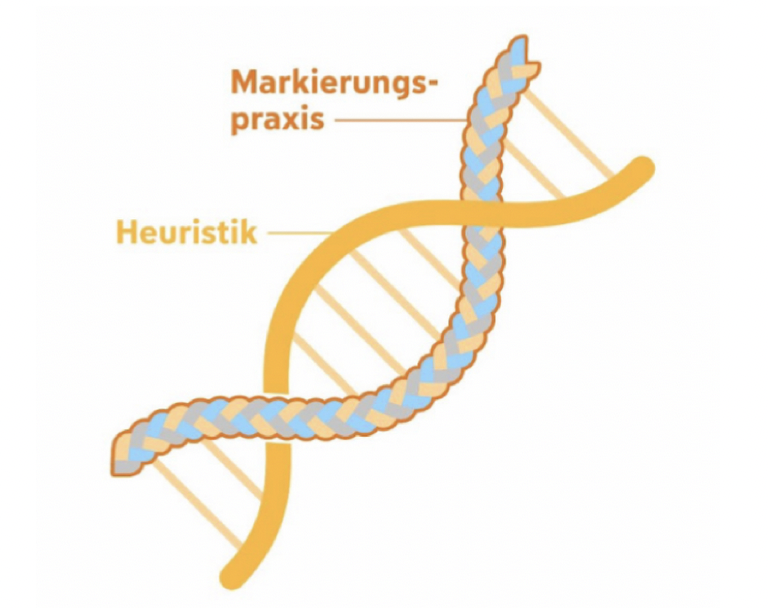
Analytical double helix
Our key aims are the establishment of a methodologically sharpened, empirically grounded paradigm and an internationally visible research base for analyzing alternative rationalities and esoteric practices in a global perspective. We will seek to understand these as processes of negotiating epistemic orders, building on a context-sensitive analytical framework that captures struggles over legitimacy and knowledge in times of “post-factual” communication crises creating ever greater political, legal and human rights challenges, in their global entanglements. We envision CAS-E in the second funding phase as a laboratory of critical scholarly practice that explores new forms of communication across conventional (including disciplinary) boundaries. The research is structured in three streams: (1) institutional-political and legal configurations, (2) configurations of social and media representation, and (3) configurations of efficacy experience.
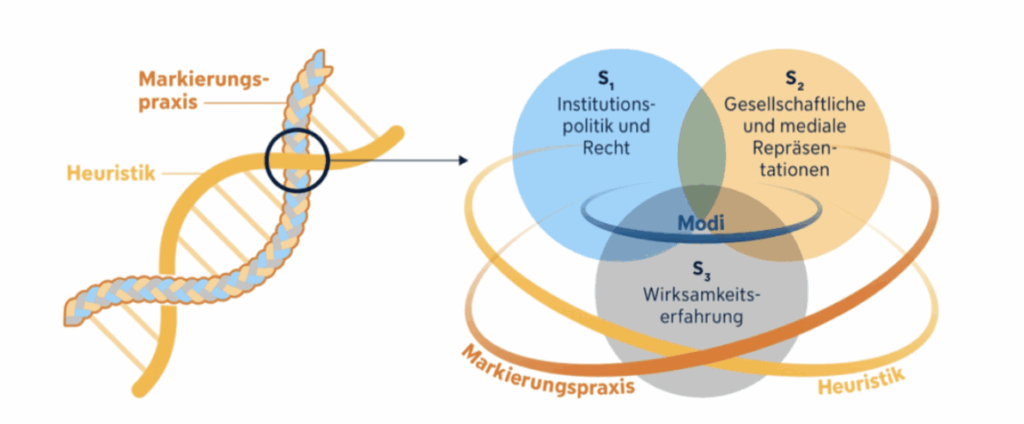
Research streams
These streams function not only as comparative entry points; as discursive-material configurations, they also render arenas of epistemic negotiation empirically accessible.
